
Car Out! Traffic Parking Games
Tripledot Studios LimitedPuzzle
4.75.37K Reviews
- Version
- 1.28.1
- Installs
- 10.00M
- Age Rating
- Everyone
Screenshots
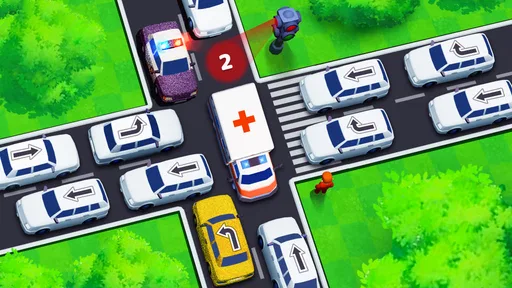
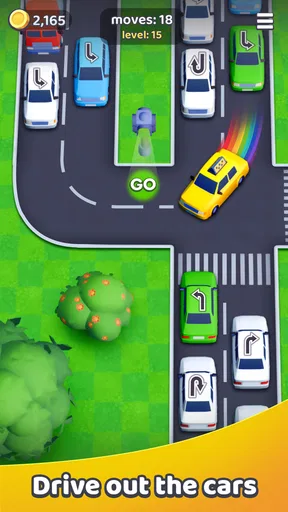
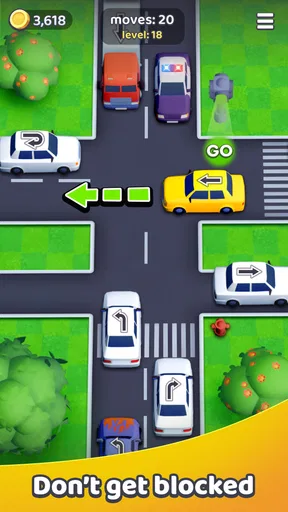
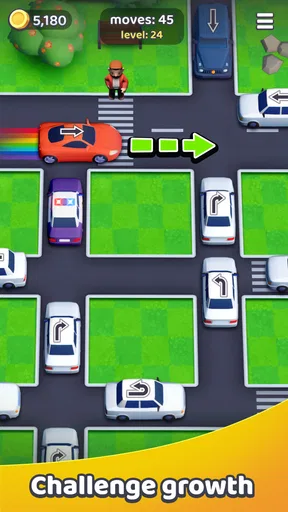
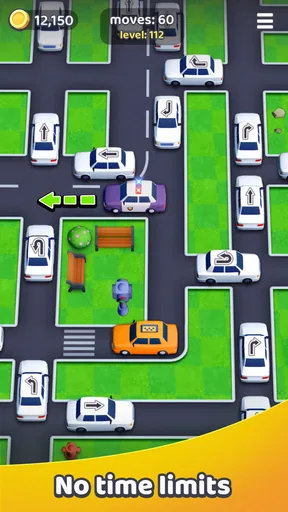
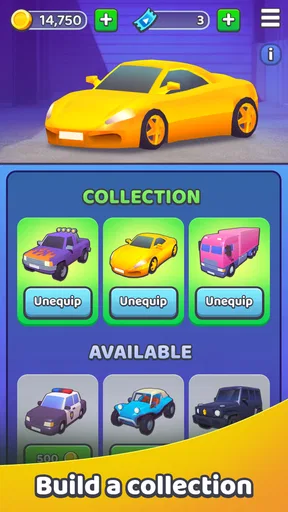
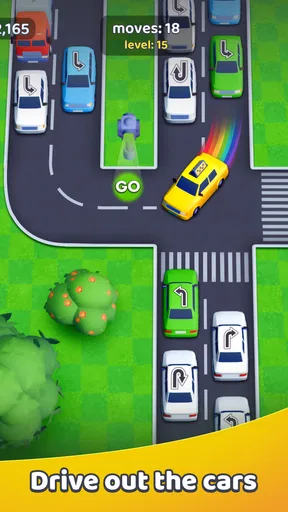
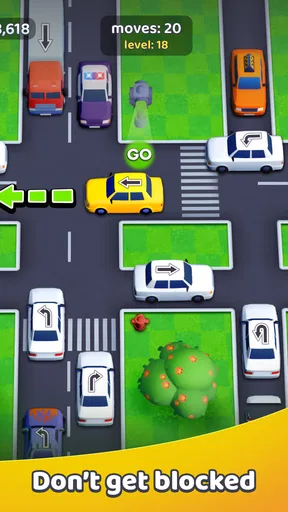
Our Review of Car Out! Traffic Parking Games
 Analysis by Appyee
Some puzzle games ask me to think several moves ahead, while others are better at filling a few spare minutes. Car Out! Traffic Parking Games sits comfortably between those two ideas. I move cars around a crowded parking area, open routes, and try to get the vehicles out without creating a worse blockage. It is easy to understand within seconds, but the later decisions demand more patience than the bright 3D presentation initially suggests.
I found the appeal in its small, satisfying loop: look at the traffic, tap a vehicle, watch it move, then immediately deal with the new space or problem that appears. There is no complicated control scheme to learn. The challenge comes from reading the arrangement correctly and resisting the urge to move the most obvious car first. That makes it a natural choice for short sessions, although players looking for a deep story, a traditional match-three format, or a completely relaxed experience may find it too narrow.
How the parking puzzles feel in everyday play
The basic idea is simple: cars are packed into a lot, and I tap them to send them along their available path. The objective is to clear the congestion and let the vehicles escape. What makes each board interesting is that one move changes the available space for everything else. A car that seems ready to leave may be blocked by another vehicle, while moving a different one can either unlock the route or make the layout harder to read.
That structure gives the game a pleasant “one more attempt” quality. I can start a level while waiting for a kettle to boil or during a short commute, make quick progress, and stop without needing to remember a complicated plot. The game is also suitable for a broad audience because its content rating is Everyone. The visual language is direct enough that a younger player can understand the goal, while adults can still enjoy the planning challenge.
The 3D view helps me judge the lot more naturally than a flat grid would. I can see the cars as objects with direction and position rather than as abstract colored tiles. At the same time, the three-dimensional look can occasionally make a crowded arrangement feel busier than it really is. When several vehicles overlap visually, I need to slow down and inspect the route instead of tapping quickly.
My most useful habit is to treat the first few moves as reconnaissance. I do not immediately send the nearest car away. I check which vehicles have a clear exit, which ones are acting as barriers, and which open spaces will matter after the first movement. This approach reduces careless mistakes and turns the game from simple tapping into a compact planning exercise.
A good fit for short breaks, with a few conditions
In a realistic everyday situation, I would use it during a ten-minute break when I want something more engaging than scrolling but less demanding than a long-form game. A level can be approached in small bursts: inspect the layout, make a couple of moves, and pause if I need to return to work. That flexibility is one of its strongest qualities.
It is less suitable when I want a game that rewards uninterrupted concentration over a long session. Repeated parking layouts can begin to feel similar if I play for too long, and the central action remains focused on moving vehicles out. Players who need character progression, exploration, or a large variety of puzzle rules should look toward another category of game.
Compared with a match-three puzzle, this asks for spatial awareness rather than color combinations and reflexive matching. Compared with a classic sliding-block puzzle, the presentation is friendlier and more immediately readable, but the experience can feel less like a pure logic problem because the cars move through a 3D parking environment. Compared with a driving game, there is no emphasis on steering skill or realistic road behavior; the enjoyment comes from planning the order of movement.
Why move order matters more than speed
The most important practical lesson is that speed is rarely the answer. I get better results when I identify the cars that control access to the center of the lot. Moving one of those vehicles can open several routes at once, while moving a car at the edge may accomplish almost nothing. This is a subtle distinction, and it is where the game becomes more thoughtful than its one-tap controls suggest.
I also watch for temporary freedom. An open lane may look useful, but if I fill it with the wrong vehicle, I can remove the space needed for a larger obstruction. In other words, an empty area is not automatically a safe area. I try to preserve at least one flexible route until I understand how the remaining cars will leave.
Another helpful technique is to pause after every meaningful move. The board may look similar, but the next available paths can change completely. Rather than tapping repeatedly, I reassess the lot after a car clears. This is especially valuable on crowded stages, where a quick chain of moves can turn a solvable position into a confusing one.
What the current release tells me about the game
Car Out! Traffic Parking Games is currently listed at version 1.28.1, which places my review in the context of a product that has already moved beyond its initial launch state. It was released on December 6, 2023, and the current version suggests an established game rather than a first experiment. I would still judge it primarily by the puzzle loop, because that is the part that determines whether the game remains enjoyable after the first few sessions.
The developer is Tripledot Studios Limited. The game has built a substantial audience, with over ten million installs, an average rating of 4.7 from around one hundred eleven thousand ratings, and about five thousand four hundred written reviews. Those figures do not replace personal testing, but they do indicate that the simple parking concept has connected with many players.
The game is free to install, while optional purchases range from $0.99 to $499.99 per item. That broad range is worth noticing before starting. I can try the core experience without paying, but anyone who is sensitive to purchase prompts should approach the monetization carefully and avoid treating optional items as part of the basic value of the game.
For compatibility, it supports Android 6.0 and later. That makes it accessible on a wide range of Android devices, including older hardware, although the visual presentation may feel more comfortable on a phone with a responsive touchscreen and enough screen space to distinguish tightly packed cars.
How the update context affects new and returning players
For a new player, the current version is the practical starting point. I would install it, play through the opening puzzles without trying to rush, and use those early boards to learn how the routes behave. The introductory simplicity is useful because it lets me develop a visual habit: identify exits, locate blockers, and preserve open space.
For someone returning after a break, the main adjustment is remembering that this is not a game where every visible move deserves an immediate tap. I would spend the first few boards rebuilding my sense of the layouts and then use the reconnaissance approach again. The version number is relevant as a sign of ongoing product development, but the real question for an existing player is whether the current puzzle flow still feels fair and varied enough to justify returning.
I also recommend separating progress from spending. Since the game is free, I can first decide whether the puzzle design itself is enjoyable. If I only feel motivated when a purchase removes friction, that is a useful warning that the game may not be the right fit for my habits. The strongest reason to continue should be the satisfaction of solving the parking arrangement, not the pressure to accelerate it.
The large audience and high average rating make the game easy to recommend as a trial, but they do not mean every player will enjoy its rhythm. Ratings often reflect quick accessibility, and that is exactly what this game offers. A player who wants a focused, lightweight puzzle may appreciate it immediately. A player who expects a rich campaign or highly varied mechanics may experience the same simplicity as repetition.
Where the experience still has limits
The central weakness is also the central identity of the game: almost everything depends on clearing traffic from a parking lot. That focus keeps the controls clean, but it limits the range of problems the game can present. If I play continuously for a long period, the basic pattern can lose some of its freshness, especially if I am hoping for a broader collection of puzzle types.
The 3D design is attractive for understanding the cars as objects, yet it can create visual friction on a small display. I sometimes need an extra moment to confirm which vehicle is in front and which route is actually open. That is not a serious flaw, but it means the game rewards deliberate taps more than hurried ones.
There is also a difference between “easy to start” and “easy to master.” The first boards may feel almost automatic, but the underlying challenge depends on planning several moves ahead. Players who dislike being punished for a poor order of actions may find the experience tense rather than relaxing. I would skip it if I wanted a purely calming idle game with no need to reconsider a move.
The purchase range is another reason for caution. Free access is helpful for testing the game, but the presence of high-priced individual items means I would keep spending controls in place, particularly on a shared device. I would not recommend making purchases until I had already decided that the puzzle loop has lasting value for me.
Small strategies that make difficult boards clearer
My first advanced tip is to classify cars by function instead of appearance. I mentally separate them into immediate exits, blockers, and vehicles that become useful only after space opens. This simple classification prevents me from wasting a move on a car that has no influence on the rest of the board.
My second tip is to preserve a “working lane.” I avoid filling every newly opened space at once because I may need that lane to reposition another vehicle. The most tempting move is often the one that makes the board look emptier, but the better move is the one that keeps future options available.
My third tip is to use failed attempts as information rather than as a reason to tap randomly. If a route collapses after one move, I ask what that move removed: a turning area, a blocker, or the only clear path. That turns a mistake into a map of the board’s dependencies. It also makes retries feel more analytical and less frustrating.
A fourth useful habit is to play with the phone held steadily and the screen kept free of distractions. Because the puzzle depends on accurate taps among nearby cars, accidental touches are more disruptive here than in a game where timing is forgiving. I get more enjoyment when I give each board a few quiet seconds instead of treating it like a reflex challenge.
Who should play it and who should pass
I would recommend this puzzle to someone who likes compact logic problems, visible progress, and games that can be understood without reading a long tutorial. It is particularly good for players who enjoy arranging actions in the correct order and seeing a congested space gradually open. The Everyone rating also makes it a reasonable family-friendly option, provided adults manage optional purchases on shared devices.
I would be more cautious recommending it to someone who wants a story, competitive multiplayer, realistic driving, or a constantly changing set of mechanics. It is not a substitute for a full driving simulator, and it does not offer the expressive freedom of a construction or management game. Its pleasure is narrower but clear: solve the traffic problem in front of me.
It may also be a poor match for anyone who becomes irritated by visual clutter or by puzzles that require undoing a mistaken sequence. The best experience comes from accepting a slower pace and thinking before tapping. If that sounds like work rather than fun, a more forgiving casual game would probably be a better choice.
What I would watch as the game continues
Because the current release is already at version 1.28.1, I would watch for how future development keeps the parking idea fresh. The most meaningful improvement would be greater variety in the decisions each board asks me to make, not simply more of the same arrangement. New layers of planning would help long-term players without making the opening experience difficult to understand.
I would also pay attention to how clearly optional purchases are presented during play. Free entry is a real advantage, but a good long-term experience depends on letting players enjoy the puzzle without feeling pushed to spend. Clear separation between solving a board and accelerating progress would make the game easier to recommend to families and cautious players.
For now, my view is positive but specific. Car Out! Traffic Parking Games works best as a focused, approachable parking puzzle for short sessions. I like the way a single car can change the entire board, and I appreciate that the controls stay simple while the decisions become more deliberate. I would install it free, test several sessions, and keep it if I enjoyed planning more than tapping. Just remember: the winning move is usually the one that preserves your next option, not the one that clears the nearest car fastest.
Verdict
Strengths of Car Out! Traffic Parking Games
- Simple controls make it easy to start playing immediately.
- Short levels are ideal for quick gaming sessions.
- Increasing traffic complexity keeps later stages engaging.
- Bright visuals make cars and obstacles easy to recognize.
- Offline play is convenient when no internet connection is available.
Limitations of Car Out! Traffic Parking Games
- Some puzzles may feel repetitive after extended play.
- Difficulty can increase sharply between certain levels.
- Frequent ads may interrupt the gameplay experience.
- Limited car variety reduces customization options.
- Mistakes can feel frustrating when traffic movement is hard to predict.
Other Releases by Tripledot Studios Limited
View All
Woodoku - Wood Block Puzzle
Puzzle4.2

Get Color - Water Sort Puzzle
Puzzle4.8


Nut Sort: Color Sorting Game
Puzzle4.8
Similar Picks in This Category
View All
Block Blast!
HungryStudio4.8

Braindom: Brain Games Test
Lahana Game Studio4.6

AMAZE!
CrazyLabs LTD4.6

Sudoku - Classic Sudoku Puzzle
Oakever Games4.7

Art Puzzle - Puzzle Games
Easybrain4.8

Amaze GO!
Oakever Games4.9
Frequently Asked Questions
What is Car Out! Traffic Parking Games and how does it work?
Car Out! Traffic Parking Games is a casual puzzle game focused on clearing crowded parking areas and traffic situations. You tap or swipe vehicles in the correct order so they can leave without crashing into other cars, barriers, or obstacles. As the levels progress, the layouts become more complicated and require planning, timing, and careful observation rather than simply making quick moves.
Is Car Out! Traffic Parking Games free to download and play?
The game can generally be downloaded for free, but it may include advertisements and optional in-app purchases. Ads can appear between levels or during certain actions, while purchases may offer extra coins, boosts, hints, or other conveniences. Before downloading, check the current store listing and in-game purchase details, especially if children will be using the device.
Does Car Out! Traffic Parking Games require an internet connection?
Many of the basic parking puzzles can usually be played without a constant internet connection, which makes the game suitable for short sessions while traveling or when mobile data is unavailable. However, an internet connection may be needed for advertisements, rewards, synchronization, updates, events, or purchases. Offline availability can vary by version, device, and installed content.
Is Car Out! Traffic Parking Games suitable for children and casual players?
The game is easy to understand because its main controls are based on tapping or selecting vehicles, making it accessible to casual players and younger users. Nevertheless, later puzzles can become surprisingly challenging and may encourage repeated attempts or the use of hints. Parents should also review advertising, purchase options, and the age rating before allowing unsupervised play.
What should I know about the difficulty, advertisements, and in-app purchases?
Car Out! Traffic Parking Games starts with straightforward levels that teach the basic movement rules, but the challenge increases as more vehicles, blocked paths, and timing restrictions are introduced. If you make an incorrect move, you may need to restart or use a hint. Depending on the version, frequent advertisements and optional purchases can affect the overall experience, so patience or ad-removal options may be useful.
Play our best games!


